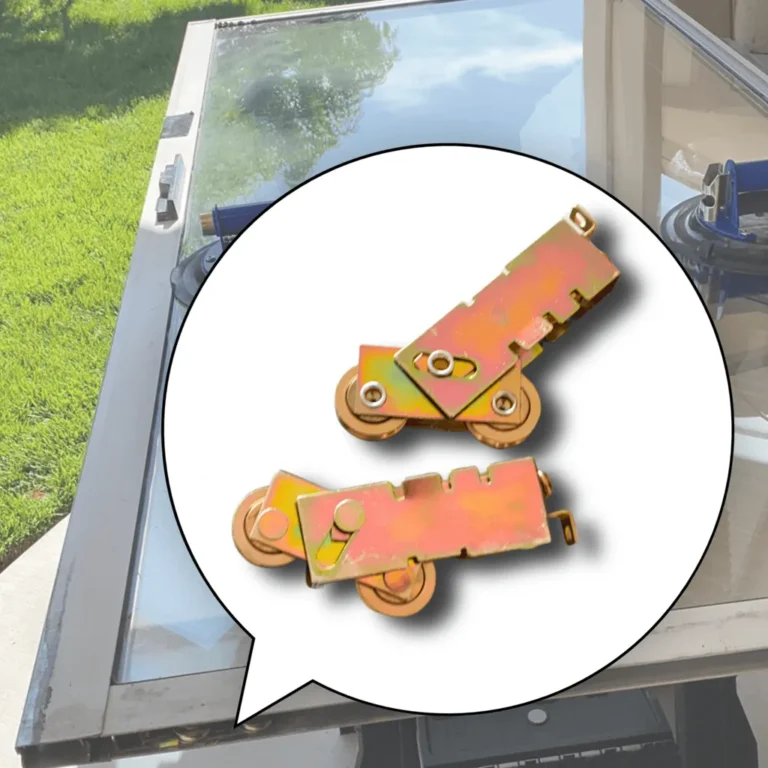
Colorado winters are hard on sliding doors in a way that surprises people. It is not only the cold. It is the swing: a mild sunny afternoon can melt snow against your threshold, and a clear night can refreeze it in the track. Repeated freeze and thaw over a Front Range winter can stress the rollers, the track and the lock. This guide covers what happens, what you can safely do, and when it is time for a repair.
Book a Free Estimate | Call 720-970-3342
What freeze and thaw does to a slider
A sliding door rides on rollers in a channel at the bottom of the frame. That channel is designed to drain through small weep holes on the outside. In a Denver winter:
- Snow drifts against the door and melts in the sun.
- Water runs into the channel. If the weep holes are blocked with fall leaves or grit, it sits there.
- At night it freezes. Ice in the track can lock the panel in place or lift it slightly off the rollers.
- Repeated freeze and thaw cycles can grind more on the rollers and the track.
By late winter, a door that was fine in October can be heavy, noisy and hard to latch.
Four winter symptoms to describe
1. Frozen shut
The door will not move at all on a cold morning, then works in the afternoon. That can be ice in the track or along the weatherstripping, or another cold-weather bind; inspection decides.
2. Heavy and grinding
Even when it is not frozen, the door drags. Melt water mixed with grit can wear the rollers. See roller replacement.
3. Will not latch
Worn rollers let the panel drop, and the lock no longer lines up with the keeper. You might have to lift the handle to lock it. Often the fix is realigning the door, not a new lock. See lock repair and why a sliding door won't lock.
4. Drafty or fogged glass
Cold air around the edges points to worn weatherstripping. Fog between the panes means the glass seal has failed; the glass can often be replaced in the existing frame. See glass repair and replacement.
What to do when the door is frozen
- Do not yank it. Forcing a door held by ice can crack a roller, bend the track or break the glass.
- Do not pour hot water on it. Hot water on cold glass and metal can cause damage, and it refreezes in the track.
- Warm it gently. Let the room heat or afternoon sun do the work. Do not force the panel, and do not use heat tools near wet glass or metal unless your door maker instructions allow a specific method.
- Clear what you can reach. Brush away snow outside and lift loose ice out of the track without chipping at the metal.
Get the door ready before the first snow
- Clean the bottom track. Vacuum out grit and leaves, then wipe it dry. Skip oil and grease; they hold dirt.
- Clear the weep holes. On the outside of the frame, clear weep holes only with a tool and method your door maker allows so water can drain.
- Check the weatherstripping. Flattened or cracked strips let cold air and moisture in.
- Test the lock. If it already needs a lift to latch in fall, cold weather can make alignment worse. Address it before deep freeze when you can.
- Keep a path clear. Shoveling a small gap in front of the door after storms keeps melt water away from the threshold.
Our sliding door maintenance checklist and how to clean a sliding door track walk through the details.
Hail and spring storms
Spring and summer storms on the Front Range can bring hail. A hard strike can crack an outer pane or dent the frame and track. When we check a storm-damaged door, we look at the glass and the frame together, because a new pane in a bent frame will not seal or slide right.
When it is a repair
Cleaning and warming fix ice and dirt. They do not fix worn rollers, a bent track or a door that has dropped. Call if the door still drags on a warm day, catches at one spot, will not latch without lifting, or the glass is cracked or foggy.
Every visit starts as a free estimate with no trip fee. We check the rollers, track, lock and glass, show you what we find, and you approve the plan. Same-day service in many cases. Repairs come with a 5-year written warranty on parts. Call 720-970-3342 or book online. Sunday to Friday, 7AM to 6PM.
A note on sun-facing doors
Denver gets a lot of sunshine, even in winter. A south or west facing slider can sit in strong sun on a cold day, so the glass and frame warm up while the threshold stays icy. That uneven warming is part of why the same door can stick in the morning and slide by mid-afternoon. It is also why weatherstripping on sunny doors tends to dry out and flatten sooner. If yours is cracked or pressed flat, cold air and melt water get in more easily, and the track problems above get worse.
What we check on a winter visit
- Roller condition and panel height, since a dropped panel is the usual reason the lock stops lining up
- The bottom track for wear, dents and corrosion from standing water
- Weep holes and drainage
- The lock, keeper and handle
- The glass and seals, including fog between panes
Winter sliding door FAQ
Can you come out in snow?
Call 720-970-3342 and we will let you know what is available. Same-day service is available in many cases, depending on your location and the schedule.
Should I spray de-icer in the track?
We would not. Chemicals and liquids collect grit and can affect the weatherstripping. Warm and clear the track instead.
Which cities do you serve?
Denver and nearby cities, including Golden, Littleton and Centennial. See areas we serve.